Angina is often described as chest pain, but this can be misleading. Angina isn't always painful, and it isn't always felt in the chest. Learn more about what this heart condition feels like, and when it can happen.
When not enough oxygen reaches the heart muscle, you may have chest pain called angina. This sheet can help you manage your risk factors for heart disease.
Watch this video to learn about Coronary Artery Disease or CAD and how it affects arteries that lead to the heart and blood flow.
Watch this to help understand that symptoms of heart disease can be different in women than in men.
Watch this to learn what time heart attacks most commonly occur.
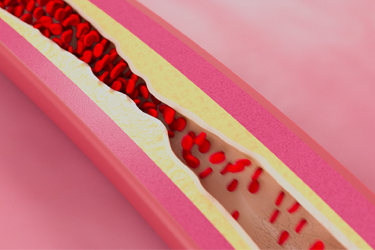
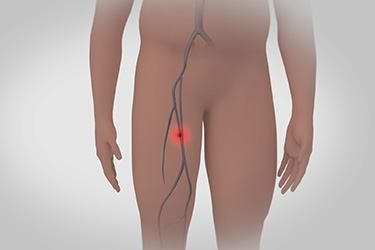
Peripheral arteries deliver oxygen-rich blood to the legs and feet. Over time, artery walls may thicken as they build up with plaque (a fatlike substance). As plaque builds up in an artery, blood flow can be reduced or even blocked, causing peripheral artery disease.
If you have been diagnosed with aortic valve disease, watch this to understand why you might need a transcatheter aortic valve replacement surgery and the benefits of this procedure.
Learn about your options for aortic valve disease, including repairing or replacing diseased valves.
In this video, Liz has a mechanical heart valve replacement to treat a heart valve condition she's had since she was a young adult.
Coronary microvascular disease (CMD) is also sometimes called small artery or small vessel disease. It occurs when the inner blood vessels of the heart become damaged. In some cases, the small arteries of the heart don't function properly.
Watch this video to understand what a DVT is and how it can cause pulmonary embolism.
Watch this video to understand ways to help prevent DVT while in the hospital.
Venous thromboembolism is when a blood clot forms in a vein. The term refers to two linked conditions: deep vein thrombosis (DVT) and pulmonary embolism.
A heart murmur is blood flow that makes a noise because of a problem in or near the heart. See how a heart murmur occurs, and when it's a cause for concern.
Infective endocarditis is an infection of the lining of the heart (endocardium) or the valves of the heart. The infection is most often from some type of bacteria.