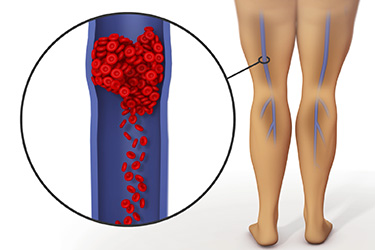
Aprende con este video que son los coágulos de sangre y los problemas serios de salud que pueden provocar si taponan un vaso sanguíneo
Este análisis de sangre muestra si usted es alérgico a algo con lo que ha estado en contacto. Es una prueba sencilla que no requiere de ninguna preparación por su parte.
Esta es una forma de solucionar problemas en el organismo centrándose en los genes. Los genes son segmentos de ADN. Son las piezas del código genético que actúan como planos de su cuerpo. Un error en un solo gen puede provocar graves problemas de salud. Si aprendemos a reparar o sustituir los genes defectuosos, podremos curar una gran variedad de problemas médicos. Con la terapia génica, podemos incorporar un gen, modificarlo o impedir que envíe instrucciones.
Este trastorno sanguíneo ocurre cuando su organismo no produce suficiente hemoglobina. La hemoglobina es una proteína presente en los glóbulos rojos. Los ayuda a transportar el oxígeno desde los pulmones hacia el resto del cuerpo. Sin la suficiente cantidad de hemoglobina, sus glóbulos rojos no funcionan bien. Se deforman y mueren más rápido de lo que deberían. Esto significa que usted tiene menos glóbulos rojos sanos en su torrente sanguíneo. Dediquemos un momento a aprender más al respecto.
A esta afección también se le conoce como «hipertensión secundaria». Ocurre cuando algún problema específico causa que su presión arterial se eleve. Esto se diferencia de la forma más común de hipertensión arterial. Esa se llama «hipertensión primaria» y en general no obedece a una causa clara. Dediquemos un momento a aprender más al respecto.
Cuando tiene esta enfermedad, el cuerpo almacena demasiado hierro. El hierro es un mineral que su cuerpo necesita para mantenerse sano. Sin embargo, un exceso puede ser perjudicial. Si padece esta enfermedad, el hierro excedente se acumula en algunos órganos, tales como el hígado, el corazón y el páncreas. Esto puede dañarlos. Dediquemos un momento a aprender más al respecto.
You may need a blood transfusion if you have lost blood because of an injury or during surgery. You may also need one because of diseases or conditions that affect the blood. This sheet helps you understand how a blood transfusion is done.
Blood is a fluid that flows throughout the body in blood vessels. Blood is needed for life. Blood carries oxygen and nutrients to your organs and tissues and helps remove waste. Blood also helps you fight infections and heal from injuries. This sheet tells you more about blood and its important role in your body.
Anemia is a condition that occurs when your body doesn't have enough healthy red blood cells. Read on to learn about anemia symptoms, diagnosis, and treatment.
Neutrophils are a type of white blood cell. Their main job is to help the body fight bacterial and fungal infections. Neutropenia occurs when there are fewer neutrophils in the blood than normal. It can range from mild to severe.
Thrombocytopenia occurs when there are fewer platelets in the blood than normal. Platelets help stop or control bleeding when you have a cut or wound. If you have thrombocytopenia, you may be at higher risk for bruising and bleeding.
Bone marrow is the soft, spongy part inside bones. It makes most of the body's blood cells. Aspiration and biopsy are procedures done to take a sample of bone marrow out of the body to exam. Find out why these procedures are done and how to prepare for them.
Blood lost during surgery may need to be replaced. Donating your own blood ahead of time is sometimes best. Depositing your own blood before surgery is called autologous blood donation.
You have been diagnosed with hypercalcemia (too much calcium in your blood). Calcium is a mineral that helps develop bones and teeth, controls heart rhythm, and allows muscles to contract.
Hyperkalemia means you have a high level of potassium in your blood. Learn how to care for hyperkalemia at home, including what diet changes to make.
Hypermagnesemia means there is too much magnesium in your blood. You will need to make certain dietary changes to manage your condition.
You have hypernatremia, a condition in which you have too much sodium in the blood. Learn how to care for yourself at home.
Hyperphosphatemia means you have too much phosphorus in your blood. You will need to make some dietary changes to manage this condition.
Hypocalcemia means there is not enough calcium in your blood. If you have this condition, you will need to make some dietary changes.
Hypokalemia means you have a low level of potassium in the blood. With this condition, you will need to make some dietary changes.
Hypomagnesemia means you don't have enough magnesium in your blood. If you have this condition, you will need to make some dietary changes.
Hyponatremia means your blood level of sodium is too low. It can be dangerous. This sheet can help you take care of yourself at home.
Hypophosphatemia is when you don't have enough phosphorus in your blood.
Polycythemia vera is a rare blood disorder in which there is an increase in all blood cells, particularly red blood cells. The increase in blood cells makes your blood thicker. This can lead to strokes or tissue and organ damage.
For a bone marrow transplant, the doctor takes healthy bone marrow from a donor and gives it to a recipient where it can begin to grow and make healthy blood cells.
Thrombotic thrombocytopenia purpura (TTP) is a very rare and sometimes life-threatening blood disorder. "Thrombotic" means that you tend to get blood clots. They form inside your body's small blood vessels.